

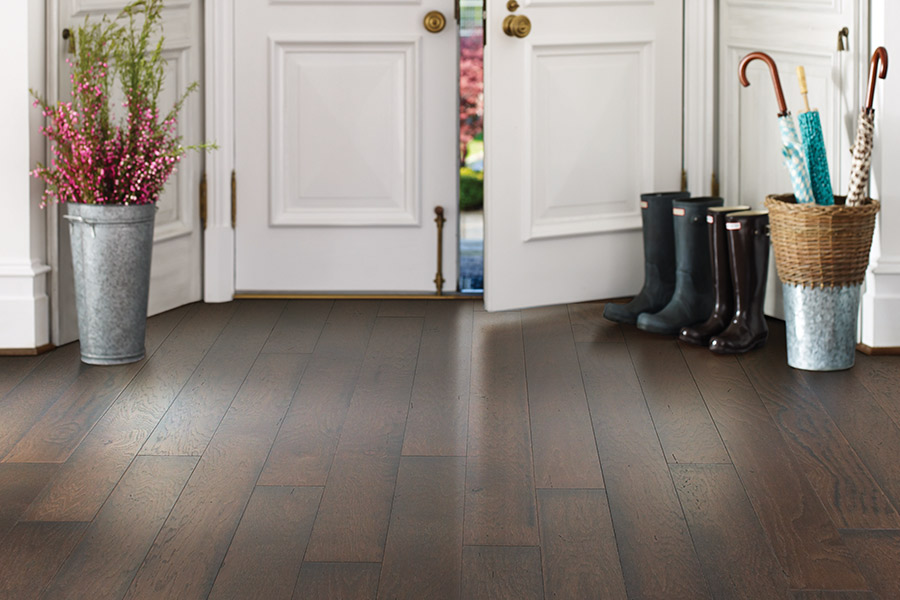
On a wet weekday in Alexandria, an entryway takes a beating before breakfast is even over. Shoes track in grit, umbrellas drip by the door, and every rushed exit leaves one more scuff where daily life lands first.
That’s why we tell homeowners to think about this space differently from a bedroom or formal dining room. Your entry has to handle moisture, dirt, and constant foot traffic without turning maintenance into another chore.
Start with the demands of the space
An entryway floor has one job above all: hold up under repetition. In a busy household, that means resisting scratches from sand, standing up to damp shoes, and staying easy to clean when the weather swings from humid summer storms to dry winter air. For many homes in Northern Virginia, laminate makes sense because it gives you the look of wood without asking for the same level of upkeep.
Not every product performs the same way, though. In foyers near exterior doors, we usually steer people toward waterproof laminate because splashes and tracked-in rain are predictable, not occasional. That extra protection matters even more in homes where the front door opens straight into the main living area, so a small mess can spread quickly.
Texture and color do more work than people expect
A floor’s appearance is not just a style decision in an entry. It also affects how forgiving the surface feels once real life starts happening on it. A smooth, glossy board can highlight every speck of dust and every streak from a damp sneaker, while textured laminate tends to disguise the small signs of traffic that build up between cleanings.
Color matters for the same reason. Mid-tone visuals usually strike the best balance because they hide debris better than very dark planks and look less stark than very pale ones when the weather is messy. If you want a classic look that works in both older homes and newer townhouses, an oak-look laminate style often gives you enough grain variation to feel warm without making the entry seem busy.
Installation matters as much as the product
Even a durable floor can disappoint if it is installed over an uneven subfloor or rushed through acclimation. Around Arlington and nearby neighborhoods, we see a mix of older plywood systems, concrete slabs, and transitional spaces added during remodels. Each one affects how a floating floor should be prepped, laid, and finished at the edges.
That’s where experience really shows up. A proper install accounts for expansion space, smooth transitions at the threshold, and the way seasonal humidity shifts can stress the joints over time. When homeowners compare materials, we always remind them that performance depends on both the product and the workmanship behind flooring installation and repair services. At Rick’s Flooring and Home Improvement, that practical side of the job matters just as much as color selection.
Think beyond the front door
Your entryway should not feel disconnected from the rest of the house. If the foyer opens into a kitchen, hallway, or family room, the best choice usually supports a consistent look instead of treating the doorway like a separate design zone. That is one reason laminate works so well during broader updates: it can tie together several rooms while staying budget-conscious.
It also helps to work with a team that sees the whole project, not just the first room. If you are reworking trim, repainting walls, or planning a larger refresh in Springfield, it is useful to coordinate flooring with full home improvement services so the finished result feels intentional from the start.
A busy entryway needs more than a floor that looks good on day one. It needs a surface that fits your routine, your layout, and the way homes in this region handle four real seasons. If you want help narrowing down the right fit, you can request a free flooring estimate and we’ll walk you through the options with you.


