

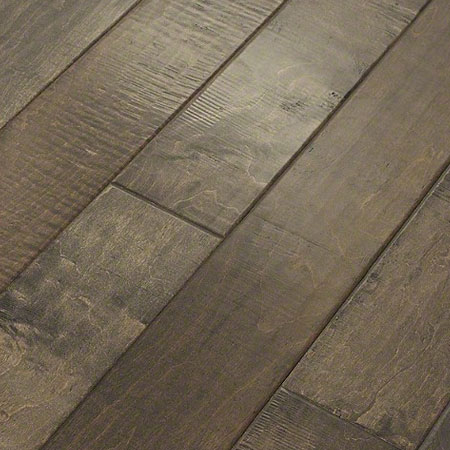
If you have ever noticed a small space open up near a baseboard in winter and then seem to shrink again when summer returns, you are not imagining things. In older homes and newer remodels alike, wood reacts to indoor humidity, and that movement is a normal part of life with a real hardwood floor.
Around Alexandria and the wider DMV, we see this all the time because the seasons do not sit still. Humid summers, dry heating months, spring rain, and closed-up houses all change the moisture level inside, which is why understanding expansion gaps matters before a floor is installed, not after.
Why hardwood moves through the year
Wood is a natural material, so it expands as it takes on moisture and contracts as it dries out. That does not mean something went wrong. It means the floor is doing what wood does, especially in a Mid-Atlantic climate where indoor air can swing from sticky in July to very dry in January.
The most important detail is that the planks need room to move at the perimeter. That is what an expansion gap does. We leave a small covered space along walls, cabinets, and fixed vertical surfaces so seasonal change does not force boards to press against the house itself. When that allowance is missing, pressure builds and you can end up with peaking, cupping, or noisy movement underfoot.
Material choice also affects how much change you are likely to see. In many local homes, engineered hardwood handles humidity swings better than solid construction because its layered build is more dimensionally stable.
What expansion gaps actually protect against
A lot of homeowners think the visible floor surface is the whole system, but installation details underneath and around the edges often determine how well it performs. Expansion space protects the floor from stress where movement has nowhere else to go. Trim and shoe molding usually hide that gap, so the room still looks finished while the boards keep the freedom they need.
This is also why proper layout, subfloor prep, and acclimation are not optional steps. Homes in Arlington and Springfield often have a mix of older plywood subfloors, additions, and level changes from past renovations, so we plan for conditions that can influence movement long after install day. Our flooring installation and services include the kind of prep work that helps a beautiful surface stay that way.
If you are still deciding between constructions, it helps to read through hardwood flooring basics before choosing a style based on color alone.
What is normal and what deserves attention
A slight seasonal change at the edges or tiny shifts between boards can be perfectly normal. What deserves a closer look is persistent buckling, pronounced cupping, wide gaps that do not improve when humidity rises, or movement concentrated near a moisture source.
That distinction matters because the cause is not always the wood itself. Sometimes the issue starts with indoor humidity, sometimes with a crawl space or slab condition, and sometimes with another part of the house. Since we are a full-service company, we can look beyond the surface when flooring symptoms connect to a broader remodeling or moisture-control issue through our home improvement services.
At Rick’s Flooring and Home Improvement, we also help homeowners choose species and constructions that fit the home they actually live in. If you want a place to start, browsing our hardwood collection can help you compare looks while keeping performance in mind.
The goal is movement you never have to think about
The best hardwood floor is not one that never moves at all. It is one installed with enough foresight that seasonal change stays quiet, controlled, and almost invisible. That comes from matching the product to the home, preparing the subfloor correctly, and leaving the right space where the eye will never notice it.
If you are planning new floors and want advice grounded in how homes here actually behave, we would be glad to help you sort through the options and set up a free flooring estimate.


