

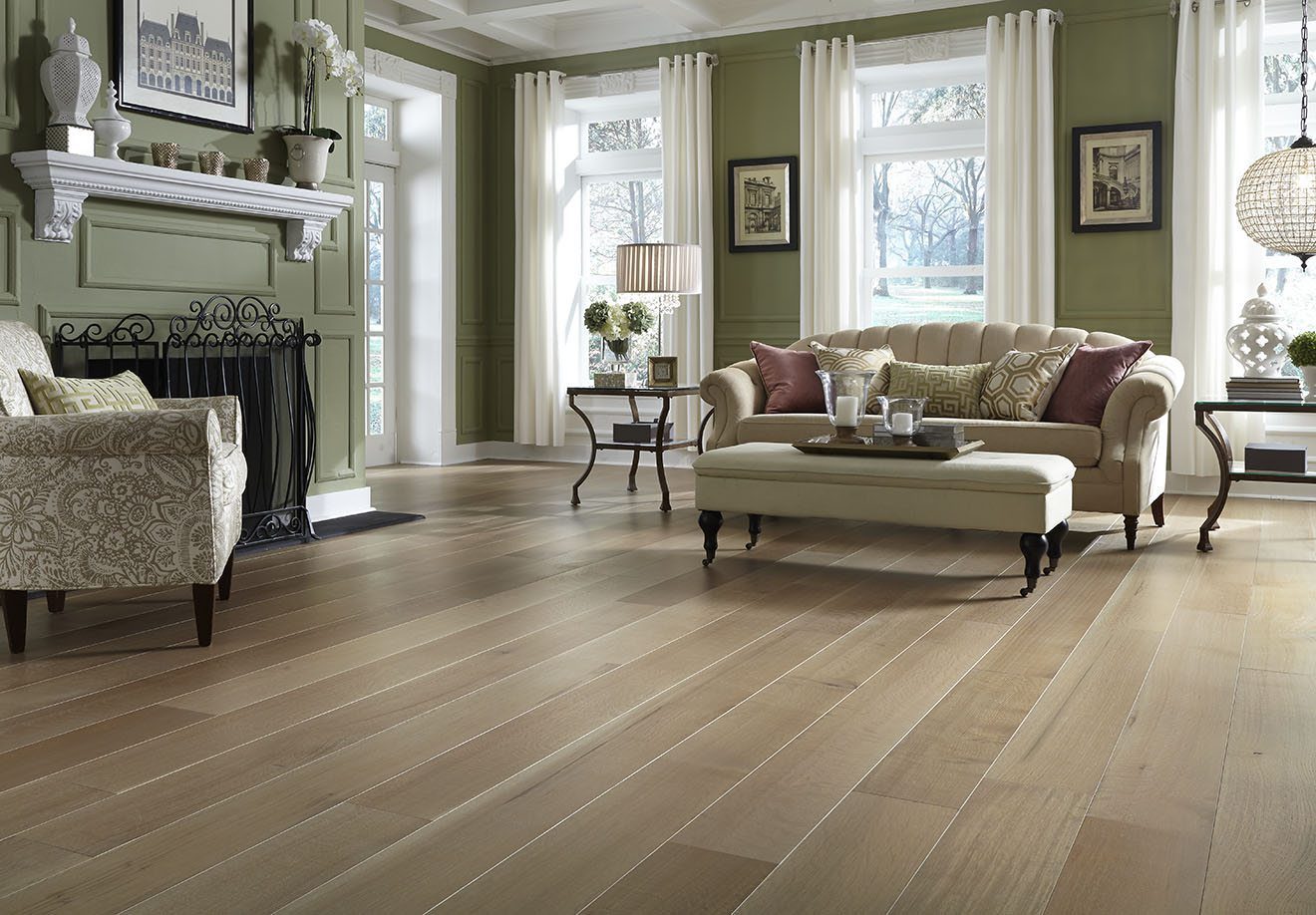
If you live in a rowhouse or older single-family home, there’s a good chance you’re walking on wood that’s seen more than one generation come and go. Those floors are part of the charm—wide planks, rich patina, maybe a few squeaks in the hallway. But historic character also comes with questions: Can you refinish what you have? Should you replace sections? And if you add new hardwood, how do you keep it looking like it belongs?
Below, we’ll walk through the key decisions so your floors respect the age of your home without feeling fragile or fussy.
Start by Understanding What You Already Have
The first step is figuring out whether your existing boards can be saved. Many older houses still have solid hardwood that has been sanded several times over the decades. A quick way to check is to lift a floor vent or look at an exposed edge and see how thick the wear layer is above the tongue and groove. If there’s still good material left, refinishing is often the most historically respectful and cost‑effective choice.
Refinishing also lets you correct color choices from past owners. A heavy orange stain from the 1990s can become a softer, neutral tone that highlights original details like millwork and stair treads. When we evaluate a project, we look at pet stains, deep gouges, and past repairs to decide whether sanding alone will do the job or whether some boards should be replaced. From there, our team can recommend hardwood refinishing and related flooring services that fit both the condition of the planks and the age of the house.
Choosing New Hardwood That Suits an Older Home
Sometimes you’re adding wood where none existed—over an old vinyl kitchen floor, for example—or tying an addition into the original footprint. In those cases, the goal is to blend old and new so the house still feels cohesive.
The most important decisions are species, plank width, and finish:
- Species: Oak is common in older Mid‑Atlantic homes because it wears well and takes stain beautifully. Maple, hickory, and some exotics can work, but oak usually feels the most period‑appropriate.
- Width: Narrow strips give a more formal, traditional look, while slightly wider boards can echo early 20th‑century styles without feeling trendy.
- Finish: Low‑sheen or matte finishes help hide wear and feel more authentic than high‑gloss coatings.
If you’re not sure where to begin, browsing our hardwood collection is a good way to see how different species and finishes might play against your existing trim, doors, and stairs. We often bring samples on site so you can compare them right next to your existing floors and natural light.
Respecting Historic Character While Updating the Whole Space
Floors rarely exist in isolation. In older houses, the condition of baseboards, stair risers, doors, and even plaster can affect how new hardwood reads. A beautifully restored floor can still feel “off” if it meets damaged trim or a dated kitchen that doesn’t match the rest of the home.
Because we handle full interior work as well as flooring, we can look at your project holistically. That might mean pairing a new oak floor with fresh paint, repairing worn stair railings, or coordinating with a kitchen or bath refresh so everything feels intentional. Homeowners who want a single team to manage these related projects often lean on our broader home improvement services instead of juggling multiple contractors.
If you’d like to see how these combinations come together in real DMV houses, our completed project gallery shows hardwood installations alongside remodels, stair makeovers, and tile updates.
Climate, Comfort, and Long‑Term Care
Older homes in this region have to contend with humid summers, heat running in winter, and sometimes less‑than‑perfect insulation. Wood responds to those shifts by expanding and contracting, which is why you might see seasonal gaps or hear more creaks at certain times of year. The goal isn’t to eliminate movement completely, but to control it so your floors stay stable and attractive.
We plan for that by leaving proper expansion gaps, recommending appropriate underlayments, and advising on ideal indoor humidity (typically in the 35–55% range). Regular sweeping, prompt cleanup of spills, and felt pads under furniture will go a long way toward preserving both original and newly installed boards. When wear does show up, a light screen and re‑coat can often restore the finish before a full sanding is needed.
Ready to Talk About Your Historic Floors?
Whether you’re uncovering original planks under old carpet or trying to match new wood to a century‑old stair, it helps to walk the space with someone who understands both historic character and modern performance. When you’re ready to explore options, request a free estimate and we’ll help you decide whether refinishing, repairs, or new installation will serve your home best for the next generation.


