

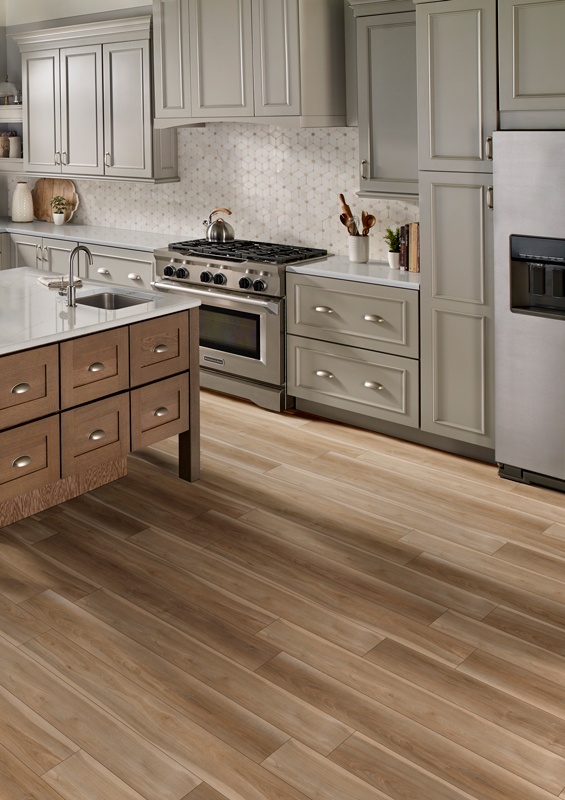
You notice it the moment you walk in: that one board that’s lifted a bit, a tiny gap that seems bigger every season, or a soft “crunch” under your feet. Laminate is designed to be tough, but in real homes with kids, pets, and Mid-Atlantic humidity, it can still act up. The good news is that many issues are fixable without tearing everything out.
Below, we’ll walk through common laminate headaches, what causes them, and what you can safely tackle yourself—plus when it’s smarter to call in a pro.
Gaps Between Laminate Planks
Those hairline openings usually show up during seasonal changes, when the indoor air gets drier and the floor contracts.
What you can do yourself
For small gaps (especially on floating floors):
- Use a flooring pull bar or a wide putty knife and a tapping block to gently nudge boards back together.
- Work from the nearest wall, removing the baseboard if needed so you can shift the whole row.
- Once the joint closes, re-attach the trim snugly to keep everything in place.
If the same seams keep separating, the original layout may not have allowed the floor to “float” correctly, or the locking system could be damaged. At that point, it’s worth looking at higher-quality materials; you can compare locking systems and water-resistant cores in our laminate catalog.
Key takeaway: Gaps you can push closed are usually minor. Joints that won’t stay together often point to installation or product issues.
Peaking, Buckling, and Boards Lifting Up
When planks press against each other and curl upward at the seams, that’s peaking. Buckling is more dramatic—sections rise or feel spongy underfoot. Both are common in humid climates and in homes where moisture gets trapped.
Typical causes
- No or undersized expansion gap at walls, columns, or door frames
- Heavy furniture pinning the floor so it can’t move
- Moisture from spills, pet accidents, or leaks below the surface
DIY checks and fixes
Start with the edges. Carefully remove a piece of baseboard and see whether the material is jammed tight against the wall. If there’s no clearance:
- Trim the planks back slightly with an oscillating tool or circular saw (use a depth setting just above the board thickness).
- Reinstall the baseboard with a tiny gap above the surface so the floor can expand underneath.
For localized buckling from a one-time spill, dry the area thoroughly, then replace any boards with swollen cores. Once swelling sets in, laminate won’t flatten back out on its own.
If you see widespread lifting or suspect a plumbing leak nearby, it’s time for a broader solution. Pros can pull up sections, dry or repair the subfloor, then reinstall or replace what’s needed using our full range of flooring services.
Key takeaway: Fix the cause (tight edges, moisture) before you worry about the appearance, or the problem will return.
Soft Spots, Creaks, and Hollow Sounds
A little “click” sound is normal with floating floors, but pronounced squeaks or soft areas usually signal movement where there shouldn’t be any.
What’s usually going on
- Subfloor isn’t flat, so boards flex as you walk
- Underlayment is bunched or missing in spots
- Joints didn’t lock completely during installation
What you can try
For a noisy joint you can clearly see moving, sometimes re-locking it helps:
- Remove the baseboard to expose the edge.
- Gently lift that row, unlock a few boards, and reinstall them tightly, checking every click connection as you go.
Soft spots over dips in the subfloor are trickier. In some cases, you can inject a specialized floor repair foam under the hollow area, but this needs care to avoid lifting adjacent boards. For larger areas—especially in older townhomes or condos around Alexandria or DC where subfloors may be uneven—flattening the base layer and reinstalling is often the lasting fix. That’s where a team that handles both flooring and structural prep, like our broader home improvement services, can save you from chasing the same squeak for years.
Key takeaway: Noisy or soft spots come from movement. Long-term repair means stabilizing what’s underneath, not just the surface.
Scratches, Chips, and Dull Finish
Laminate can shrug off a lot of abuse, but dropped tools, pet claws, and gritty shoes will eventually leave marks.
Minor damage fixes
- For light scratches, use a laminate repair marker or wax pencil matched to your color. Buff the area after filling so it blends.
- For deeper chips, fill with a laminate repair putty, level it with a plastic scraper, and wipe away excess before it hardens.
- To refresh a dull surface, clean with a manufacturer-approved laminate cleaner—never steam mops or wax, which can damage the wear layer.
When damage is focused on a few planks along a traffic path, it may be worth replacing just that section. If you’re planning a larger refresh—like tying your flooring into a kitchen or bath update—you can get ideas from our completed project gallery to see how new surfaces transform real DMV homes.
Key takeaway: Small scratches are cosmetic and fixable. Repeated damage in the same spots may be a sign you need a tougher product or a layout change.
When to Call a Professional
You can absolutely handle minor gaps, touch-ups, and a few lifted edges. But if you see any of these, bring in help:
- Widespread buckling or swelling
- Persistent moisture or signs of mold
- Large soft areas or sagging subfloors
- Damage that keeps coming back after a DIY fix
A professional can diagnose whether the problem is product choice, installation, or the building itself—and help you choose a solution that will stand up to our region’s humidity swings and everyday life.
When you’re ready to stop fighting the same issues and either repair properly or explore a better laminate option, you can request a free estimate, and our team will walk you through the best next steps for your home.


