

You’ve picked out a laminate that looks just like real wood, the boxes are stacked in the hall, and now the big question hits: how should it be installed? For most homeowners, that choice comes down to two methods—click-lock (floating) and glue-down. The material may be the same, but the way it goes on your subfloor can change everything from noise and comfort to how easy repairs will be later.
Below, we’ll walk through how each method works, where each one shines, and what we typically recommend for homes around the DMV’s mix of condos, townhouses, and single-family houses.
How Click-Lock Laminate Works (And When It Makes Sense)
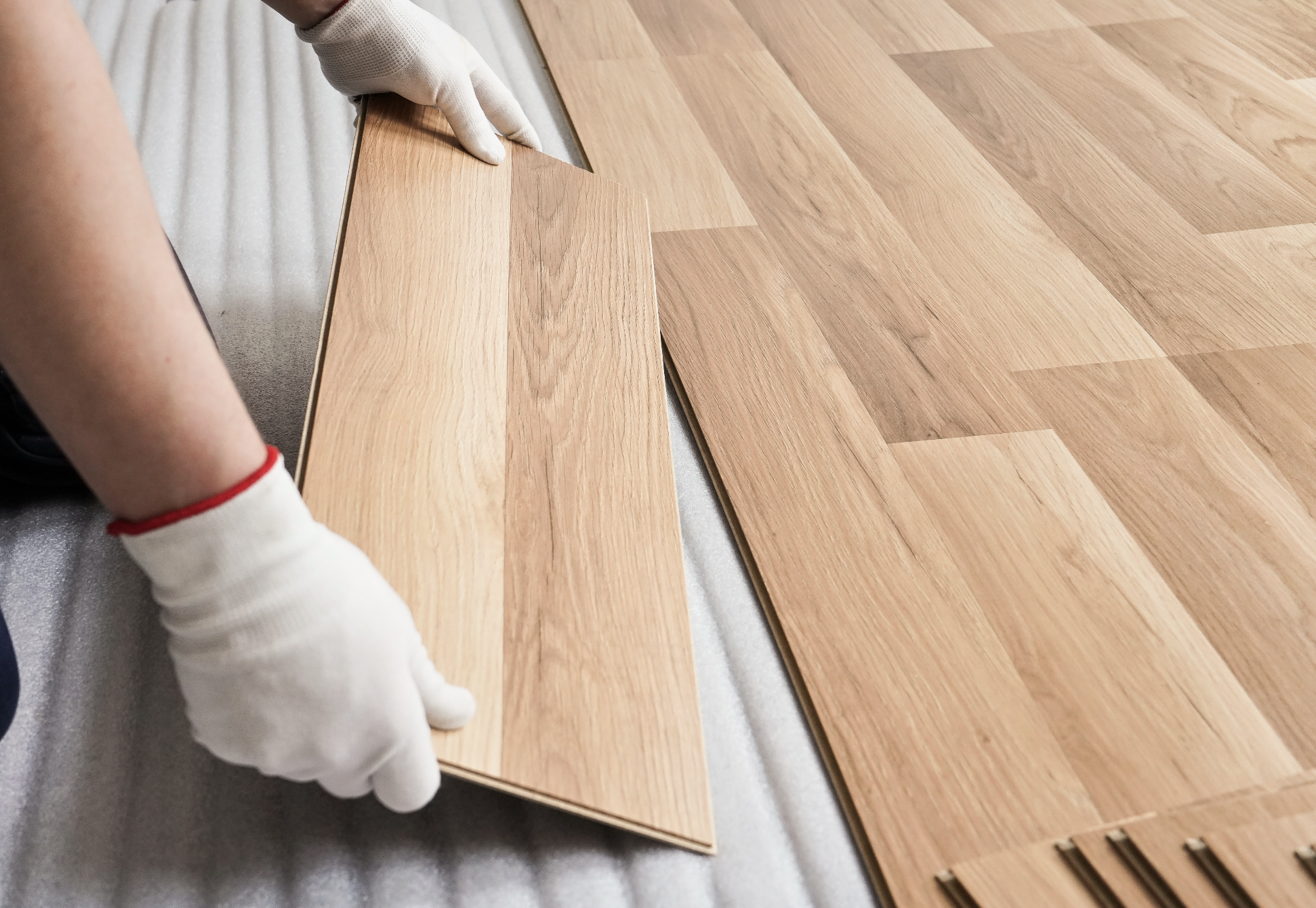
Click-lock laminate is designed to snap together along the edges, forming a “floating” surface that rests on top of an underlayment rather than being attached to the subfloor. Each plank locks into the next, so the entire surface acts like one large panel that can expand and contract with seasonal humidity.
For most busy households, the big advantage is speed and simplicity. Floating installations are usually quicker, there’s no adhesive to cure, and damaged planks in the middle of a room can often be replaced without tearing everything up. That’s especially helpful in condos or townhomes where access and working time may be limited. If you’re exploring options for this type of installation, you can compare wood-look styles and thicknesses in our laminate catalog.
Click-lock also pairs well with underlayments that add sound reduction and a bit of cushioning. In multi-story homes, that can cut down on footfall noise between levels. The tradeoff is that floating floors can feel slightly more “hollow” underfoot if the subfloor isn’t flat or the wrong pad is used, which is why careful prep and the right products matter.
How Glue-Down Laminate Works (And Where It Excels)
Glue-down installations bond each plank directly to the subfloor with adhesive. Instead of a single floating panel, every piece is anchored in place. This creates a more solid, dense feel underfoot and can reduce movement and creaking, especially in high-traffic areas.
This method really shows its strengths in rooms where stability matters—long hallways, open-plan living spaces, or areas with rolling loads like office chairs. When the subfloor is properly prepared, glued laminate can feel closer to a traditional hardwood floor in terms of firmness and sound. For homeowners comparing laminate to solid or engineered wood, it can be helpful to also look at finishes and species in our hardwood collection to understand how each surface will behave over time.
The main drawbacks are installation complexity and repair difficulty. Adhesive work is slower, there’s curing time to consider, and removing a damaged plank later often involves cutting and chiseling. It’s rarely a DIY-friendly route, which is why most glue-down projects are best handled by an experienced crew.
Climate, Subfloors, and Lifestyle: Choosing the Right Method
In the Mid-Atlantic’s humid summers and drier winters, seasonal expansion and contraction is a real factor. Floating click-lock systems are engineered to move as one, which helps protect joints when humidity swings. Glue-down installs rely much more on precise acclimation and subfloor moisture control; done correctly, they’re very stable, but they leave less room for error.
Subfloor type also matters. Over older plywood, both methods can work if the surface is flattened and secured. Over concrete slabs, moisture testing becomes critical, and the decision may hinge on whether you prefer the softer, slightly warmer feel of a floating floor with underlayment or the rock-solid feel of a fully bonded surface. When we evaluate a home, we often look beyond the floor itself—if you’re planning a larger refresh that might include painting, trim, or repairs, our broader home improvement services can be scheduled around the installation so everything ties together cleanly.
Lifestyle is the final filter. Families with kids, pets, or frequent moves often lean toward click-lock because of easier repairs and faster installation. Homeowners who prioritize a firm, quiet, “built-in” feel sometimes prefer glue-down, especially in long-term residences.
Professional Installation vs DIY: What We Recommend
Both systems can technically be installed by handy homeowners, but the margin for error is different. Click-lock is more forgiving, yet it still demands flat subfloors, correct expansion gaps, and thoughtful layout. Glue-down adds adhesive choice, spread rate, open time, and cleanup to that list.
Because laminate is usually part of a larger investment—new baseboards, fresh paint, maybe a kitchen or bath update—we typically recommend having a pro handle the work. Our installers deal with everything from simple bedrooms to complex remodels, and our full range of flooring services is set up to manage prep, installation, and follow-up so the floor performs the way the manufacturer intended. If you want to see how different products look once they’re down, our completed project gallery shows real installs from homes across the region.
Ready to Talk Through Your Laminate Project?
Whether you’re leaning toward a quick, flexible click-lock floating floor or a rock-solid glue-down installation, the best choice comes from matching the method to your subfloor, climate, and how you actually live in the space. When you’re ready to run through options, compare costs, and get a plan that fits your home, you can request a free estimate and we’ll help you map out the right approach from the first plank to the last piece of trim.


