

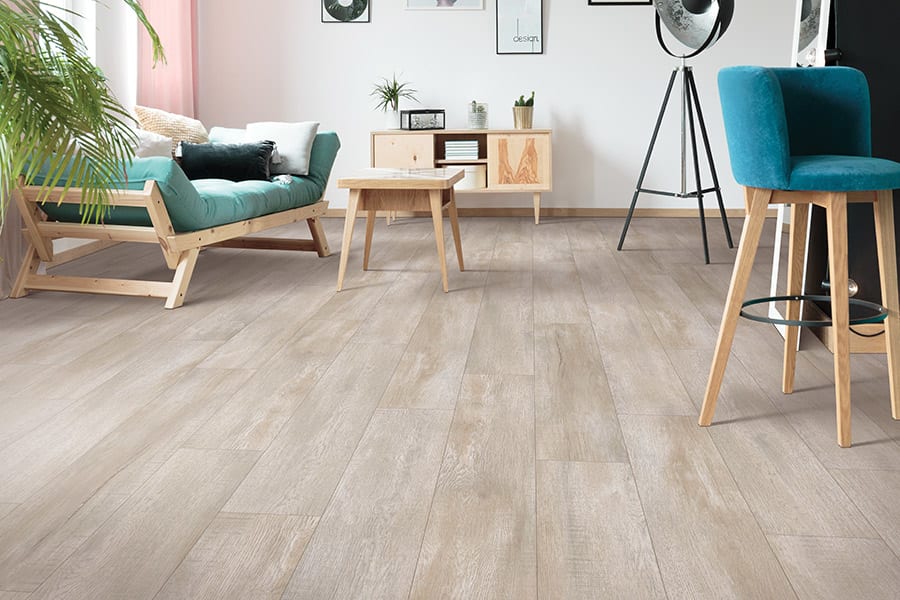
You know it’s time. The carpet has seen better days, the old vinyl is curling at the edges, or that “temporary” kitchen floor has somehow lasted a decade. You want something that looks like hardwood, holds up to real life, and makes sense for our Mid-Atlantic climate. That usually narrows things to two contenders: laminate and luxury vinyl plank (LVP). Both are strong options, but they shine in different situations.
How They’re Built (And Why It Matters)
Laminate is essentially a dense fiberboard core topped with a high-resolution wood image and a tough wear layer. The core gives it a solid, stable feel underfoot and excellent resistance to dents from furniture and daily traffic. Many homeowners love laminate because it often delivers some of the sharpest wood visuals at a budget-friendly price point.
Luxury vinyl plank uses a plastic-based core (sometimes rigid, sometimes flexible) with a printed design layer and clear protective topcoat. That vinyl core is what makes LVP inherently waterproof, which is a big reason it has exploded in popularity. Modern options in our luxury vinyl collection include realistic textures and wider planks that rival engineered wood.
In short: laminate wins on “wood-like” feel and scratch resistance in dry spaces, while vinyl wins wherever moisture is a concern.
Water, Humidity, and the DMV Climate
Our region brings humid summers, rainy shoulder seasons, and the occasional winter slush tracked inside. That combination makes moisture performance a key part of the decision.
Traditional laminate is water-resistant, not waterproof. Spills that get wiped quickly are fine, but standing water or repeated mopping with excess moisture can swell the core and cause edge damage. Newer “water-resistant” laminates buy you more time, but they still have limits. For living rooms, bedrooms, and home offices, that’s usually not a dealbreaker.
LVP, on the other hand, is built to handle everyday moisture and wet mopping. That’s why it tends to be the safer pick for kitchens, basements, bathrooms, and entryways where snow, rain, and pet water bowls are part of normal life. If you want one material you can run through almost the entire level, vinyl is often the more flexible choice.
If you’re drawn to the look and feel of laminate, you can still use it smartly: keep it in the drier zones and pair it with tile or stone in true splash areas. When we help homeowners compare options in our laminate catalog, we often map out the floorplan room by room for that reason.
Comfort, Sound, and Everyday Wear
How a floor feels and sounds can be just as important as how it looks, especially in townhomes, condos, and busy family spaces.
Laminate’s fiberboard core creates a firmer, more “wood-like” step. With quality underlayment, it can reduce echoes and feel substantial underfoot, which many people prefer in main living areas. Laminate also tends to be strong against surface scratches, making it a good match for rolling office chairs and energetic pets.
LVP is slightly softer and warmer to the touch. That vinyl core can absorb impact, which is nice in playrooms, home gyms, or multi-story layouts where sound transfer matters. Higher-end planks with attached pads can noticeably quiet footsteps. If you want to see how that difference plays out in real homes, our completed project gallery is a helpful visual guide.
From a wear standpoint, both can perform well when you choose a reputable brand and the right wear layer. The real difference often comes down to how you live: laminate in drier, high-traffic spaces; LVP where spills, pets, or kids are part of the daily routine.
Resale, Style, and the Bigger Home Picture
In a market where resale value matters, buyers are increasingly familiar with both materials. Many now associate luxury vinyl with low-maintenance, waterproof performance, which can be a selling point in listings. Laminate still appeals when it mimics hardwood closely and is installed cleanly with coordinated trim and transitions.
The best results come when flooring is chosen as part of a bigger plan. Because we handle flooring along with painting, trim, and other home improvement services, we can help you coordinate colors, sheens, and finishes so the new floors feel intentional rather than piecemeal.
If you like to compare materials in person before deciding, our Alexandria showroom on Richmond Highway lets you see how different planks look in real light, side by side.
Ready to Sort Out Laminate vs LVP in Your Own Rooms?
Both laminate and luxury vinyl can be the “right” answer; the key is matching the product to your rooms, lifestyle, and long-term plans for the home. We’re happy to talk through moisture, subfloors, sound, and budget, then suggest specific lines that fit.
When you’re ready to take the next step, request a free estimate and we’ll help you compare options, measure your space, and build a plan that makes sense.


