

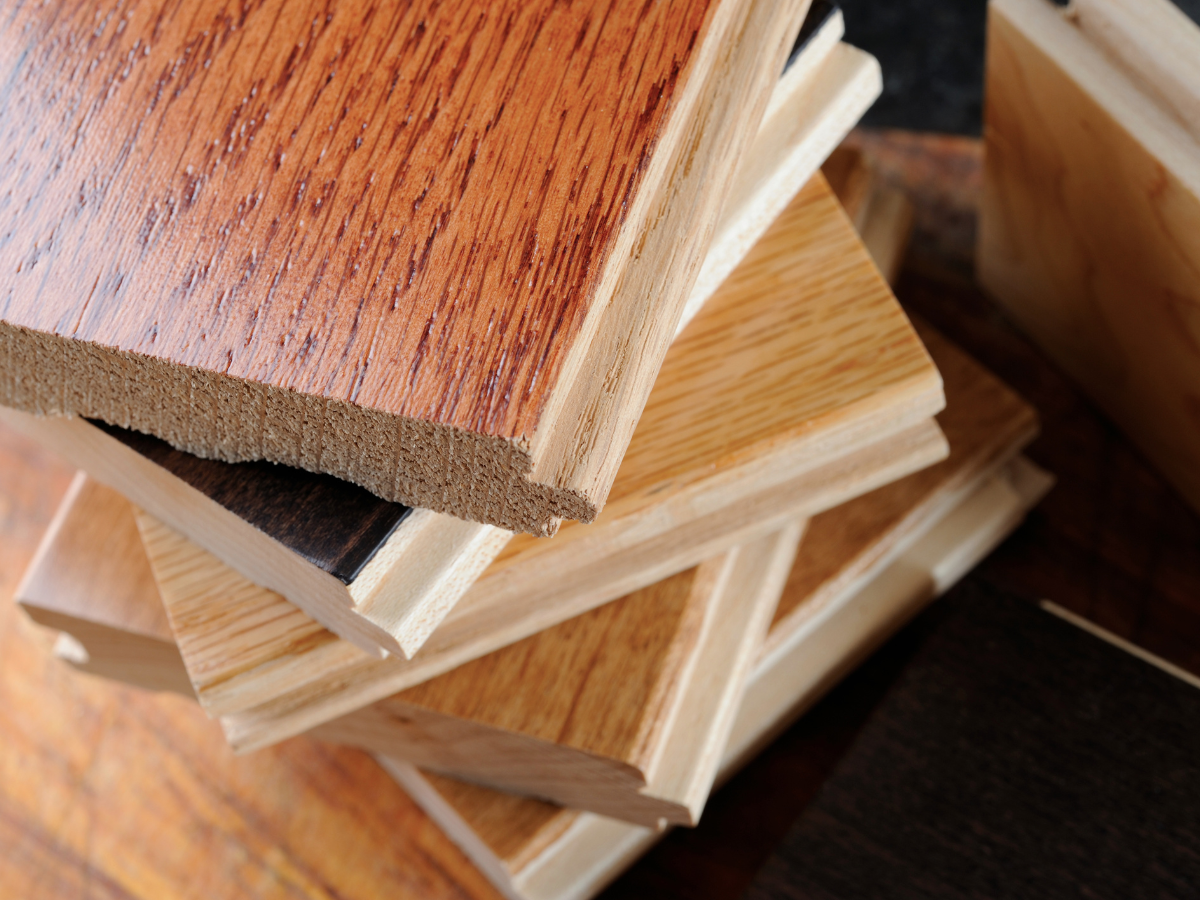
Light, warm-neutral wood floors are what most people are choosing right now, with white oak in natural and soft greige tones leading the way and the cool-gray wave of a few years ago fading. Deep espresso and rich walnut tones still have a strong following in formal rooms. What's worth knowing before you commit is that the floors that photograph best aren't always the ones that live best, and the trendiest colors are often the ones that show the most dirt. This guide pairs each popular tone with the wood and the sheen that actually carries it.
We help homeowners around Alexandria pick floor colors every week, and the same advice holds up year after year: choose a tone you'll still like when the trend has moved on, and choose a wood and finish that hide daily life instead of advertising it.
What Wood Floor Colors Are Homeowners Choosing?
The clear direction is toward lighter, warmer neutrals and away from both the orange-tinted oak of past decades and the very cool grays that peaked recently. Light natural and blonde floors make a room feel larger and brighter and hide dust far better than dark ones. Warm honey and caramel tones bring back some of oak's natural color without the old orange cast. Soft greige, a greige that reads gray and beige at once, is where a lot of the cool-toned demand landed once pure gray started to look dated. Very dark floors haven't gone anywhere in formal spaces, where their drama is the point.
None of these is a rule, and the right color depends on your light, your walls, and how much upkeep you want to sign up for. A north-facing room with cool daylight reads a gray floor colder than a sunny south-facing one does. The safest bet in a home you plan to keep is a tone close to the wood's natural color, because it dates the slowest and shows scratches the least.
Why White Oak Took Over the Modern, Cool-Toned Look
White oak became the default for light and cool-toned floors because of its undertone rather than its price or its hardness. Every wood carries an undertone, the faint background color that shows through a stain. White oak's is a neutral tan, so a gray, greige, or natural finish lands on it clean and true. Red oak carries a pink to salmon undertone, and that pink pushes back against cool colors: a gray stain over red oak often drifts toward mauve or a fleshy pink that nobody asked for. If your heart is set on a cool or gray floor, the species matters as much as the stain.
Hardness is a smaller part of the story, though it is worth a look. On the Janka scale, which rates a wood by the force it takes to press an 11.28-millimeter steel ball halfway into a board, white oak comes in at 1,360 pounds and red oak at 1,290, close enough that both wear well in a family home. Harder woods change the color question again: hard maple at about 1,450 and hickory near 1,820 have busier, more variable grain that can look restless under a dark stain, so they tend to shine in lighter, more natural finishes that let the grain be the feature.
Do Dark and Gray Floors Show More Wear?
Dark and gray floors show the most wear of any color, which is the single biggest thing trend photos leave out. A dark floor is a magnet for dust, pet hair, and every footprint, and a scratch that reaches the pale wood under a dark stain stands out like a chalk line. Gray floors have the same problem and add another: as a finish ages, gray can start to look flat or dingy in a way a natural tone does not. This isn't a reason to avoid them, only a reason to go in knowing they ask for more frequent cleaning.
Sheen changes how much of that wear you see, and it matters as much as the color. The sheen is how glossy the finish is, and a lower one hides more: a matte or satin floor scatters light and disguises dust and fine scratches, while a semi-gloss or gloss floor reflects light and puts every mark on display. For a dark or a busy floor, a matte or satin finish is what keeps it looking clean between cleanings. We break down the trade-offs among the different sheen levels and finishes in a separate guide worth reading before you pick one.
Popular Wood Floor Tones and What Suits Them
Tone | Wood that carries it best | Sheen to pair | Upkeep reality |
Light natural / blonde | White oak, maple | Matte or satin | Hides dust and scratches best |
Warm honey / caramel | Red oak, hickory | Satin | Forgiving, dates slowly |
Greige / soft gray | White oak | Matte | Shows dust; avoid on red oak |
Deep espresso / walnut | White oak, walnut | Matte or satin | Shows every speck and scratch |
Can You Change Your Floor's Color Without Replacing It?
You can recolor a solid wood floor as often as you like by sanding it back to bare wood and applying a new stain. Because a refinishing pass removes only about 1/32 inch, or closer to 1/16 inch for a heavier sanding, a solid floor holds many color changes across its life, which is what makes wood the forgiving choice for anyone who follows trends. Site-finishing a new color goes best when the room sits between 30 and 50 percent relative humidity and 60 to 80 degrees, the range the National Wood Flooring Association gives for keeping boards stable while the finish cures.
Engineered wood can be re-stained too, but only if its real-wood top is thick enough, which that same association puts at 2.5 millimeters for a factory-finished board and 3.2 millimeters for an unfinished one. Laminate is the exception: its color is a printed image sealed under a clear layer, and since that layer can't be sanded, a laminate floor wears the color it came with for good. If you like to change your look every so often, that difference is worth weighing when you buy.
Common Questions About Wood Floor Colors
Are gray hardwood floors going out of style?
Pure cool gray has cooled off, but greige and other warm-leaning neutrals have taken its place, so gray-adjacent floors are far from gone. The shift is away from the coldest, bluest grays and toward tones that carry a little warmth and read softer over time. If you love a gray floor, a warm greige on white oak is the version that has aged best.
What is the most low-maintenance wood floor color?
A light-to-medium natural tone in a matte or satin finish is the most forgiving color you can choose. Light floors hide dust and pet hair that a dark floor broadcasts, and a low sheen scatters light so fine scratches disappear. Together they mean less time cleaning and longer between refinishes.
Should the floor be lighter or darker than the walls and cabinets?
Contrast between the floor and the walls or cabinets makes a room feel intentional, and which direction you go is a matter of the look you want. A light floor under darker cabinets feels open and airy; a dark floor with light walls feels grounded and formal. What tends to fall flat is a floor that matches the cabinets almost exactly, which can wash the room out.
Does floor color affect resale?
Neutral, natural wood tones appeal to the widest range of buyers, which is why they are the safe choice if resale is on your mind. Very dark, very gray, or strongly colored floors can date a home or read as a personal choice a buyer will want to redo. When in doubt, lean natural.
Choosing a Color You'll Still Like in Ten Years
The color that stays right is usually close to the wood's own tone, in a matte or satin finish, on a species that carries your palette without a fight. Samples never look the same in a store as they do in your living room, so browse the hardwood colors we carry, read up on the basics on our hardwood information page, and then request a free estimate so we can bring samples to see in your own light before you decide.


